
The "Hungry Water" Effect
The most common cause of plaster failure in cold climates isn't actually ICE, it's really the Langelier Saturation Index (LSI) and it can get worse when it freezes.
Science: As water temperature drops, it becomes more "aggressive" or corrosive. Even if the water was perfectly balanced in September, that same water becomes "calcium-hungry" at 35F / sq. ft. = $.
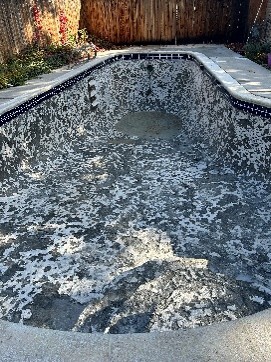
The Damage: To balance itself, the freezing water leaches calcium directly out of your plaster. This causes etching, a sandpapery texture, and "winter dust." Over several seasons, this eats through the waterproof seal of the plaster, requiring a full chip out, resurface as depicted in both images.
Freeze-Thaw Expansion & Delamination: Idaho’s high-desert climate often features warm days followed by freezing nights. This cycle is lethal to masonry. The Process: Plaster is porous. When water enters those pores and freezes, it expands by roughly 9%. This internal pressure creates micro-fractures.
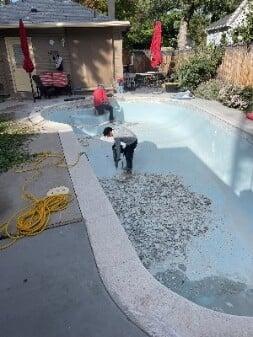
Delamination: When water gets trapped between the plaster and the underlying gunite shell and freezes, it acts like a wedge. It literally "pops" the plaster off the wall. This is why you see large chunks of plaster falling off in the spring - phenomenon known as delamination.
https://www.pooldoctorandspa.com/remodeling-new-construction
What do people really say about Pool DoctoRx ?
Read Our Reviews Here https://bit.ly/4aa13qr
Have Questions?
Call or Text
208-287-3747